Alcohol Hand Sanitizer Poses Danger to Children

October 29th, 2009
Fox News - Alcohol Hand Sanitizer Poses Danger to Children

Fox News - Alcohol Hand Sanitizer Poses Danger to Children

FOX NEWS : ALCOHOL HAND SANITIZER POSES DANGER TO CHILDREN

http://www.foxnews.com/search-results/m/27071670/sanitizer-safety.htm#q=sanitizer

As the owner of HomeHealthDelivery.com and the parent of a 7 and 5 year old, I would never let my children carry a alcohol hand sanitizer with them.  I am happy to say that they both carry small bottles of GentleCare Non Alcohol Hand Sanitizer in their backpacks and take it to school with them.

H1N1 Virus (Swine Flu) overshadows other harmful organisms.

October 13th, 2009

M.R.S.A. – Methicillin Resistant Staphylococcus Aureus is still a concern and another reason to use GentleCare Non Alcohol Hand Sanitizer.

What is M.R.S.A.?
M.R.S.A. is a type of infection caused by the bacteria Staphylococcus aureus. These bacteria are commonly carried on the skin or in the nose of healthy people. Some strains of staph are resistant to a class of antibiotics such as methicillin (a synthetic form of penicillin) and thus called Methicillin-Resistant Staph aureus (or M.R.S.A.).

Who gets M.R.S.A.?
S. aureus (or Staph) including M.R.S.A. can be spread among people having close contact with an infected person. M.R.S.A. is almost always spread by direct physical contact and not through the air. Transmission may also occur through indirect contact by touching objects such as towels, clothes, door knobs, workout areas, or sports equipment contaminated with the staph.

Where will I find M.R.S.A.?
Staph bacteria can live on the skin or in the nose of healthy individuals without causing any symptoms of disease. This is known as colonization. However, injury to the skin such as a scrape or cut can allow the bacteria to enter the skin and cause an infection.

M.R.S.A. is not confined to just healthcare facilities. Cases of M.R.S.A. infection in the community setting (e.g. Day care centers, schools, prisons) are called Community-Associated M.R.S.A. and have been on the rise and show no sign of slowing. Our children are at risk and it is up to us to protect them.

Use GentleCare Non-Alcohol Foaming Instant Skin Sanitizer today!
Incorporating GentleCare into your facility will not only protect our children from M.R.S.A., it will also reduce absenteeism due to colds, flu and other illnesses.

No-rinse bath in a bag make bathing easier.

August 5th, 2009

Rinse-free bath in a bag products are ideal for a quick and easy way to clean, freshen and maintain healthy skin for bed bound or disabled patients.

Warm according to directions on the package.

  1. Consult package for complete indications, ingredients and warnings.
    1. 2. Bathing a Patient with Comfort Bath Product
    2. Wash hands prior to the procedure and don a pair of gloves.
    3. Explain the procedure to the patient.
    4. Ensure the patient has privacy. Have patient remove gown or assist in the removal as needed. Use a towel or sheet to cover the patient appropriately.
    5. Peel back the label on the package and test the temperature by touching the top washcloth. Remember, gloves diminish your sensitivity to heat. If temperature is acceptable, proceed to the next step.
    6. Remove #1 washcloth.  Apply washcloth to back of patient’s hand or inside wrist/forearm area. Ask patient if the temperature is acceptable. If acceptable, proceed with next step. If NOT acceptable, STOP procedure. Repeat every 10 minutes until temperature is acceptable to the patient.

KEY POINT: Continue to monitor patient’s comfort level with the temperature as the bath progresses.

  1. Using the #1 washcloth, clean the face, neck and chest. Discard when finished. No rinsing or drying is required.

KEY POINT: Follow the bathing procedure in sequential order. This reduces the chance of cross-contamination by providing a clean cloth for separate areas of the body, while maximizing appropriate use of the product to prevent waste.

  1. Remove the #2 washcloth. Clean the right arm and armpit and discard.

KEY POINT: For patients with potential for moisture entrapment in skin folds, pat dry with clean soft towel if necessary. Use caution around dressings, intravascular lines, etc.

  1. Remove the #3 washcloth. Clean the left arm and armpit and discard.
  2. Remove the #4 washcloth. Clean the perineal area and discard. If patient is incontinent, follow the incontinence care protocol.
  3. Remove the #5 washcloth. Clean the right leg and discard.
  4. Remove the #6 washcloth. Clean the left leg and discard.
  5. Ask the patient to turn on his/her side, if able, or obtain assistance to turn, as necessary. Remove the #7 washcloth. Clean the back and discard.
  6. Remove the #8 washcloth. Clean the buttocks and discard. If additional cleaning in the buttocks region is necessary, use the appropriate incontinence care products.
  7. Apply clean gown, reposition and cover the patient as necessary.
  8. Discard all disposables as general waste. Do not flush Comfort Bath washcloths in the toilet.
  9. Document procedure in progress notes.

APPLICABILITY: The Comfort Bath policy is applicable to all healthcare workers assigned to provide bedside bathing to patients.

DO NOT FLUSH COMFORT BATH WASHCLOTHS

National Do Not Call Registry and Your Privacy.

July 24th, 2009

HomeHealthDelivery.com will never share your personal information with anyone.  We do not telemarket or SPAM our customers or non-customers either.  We will only send from time to time important information concerning your account or coupons and specials that will benefit you.

As you may or may not be aware, the cell phone companies will be releasing all of the cell phone numbers to telemarketers at the end of July 2009.  If you have not yet registered your phone number with the Do Not Call List than you may run the risk of being solicited on your cell phone at your expense.

Here is the information for you to add your phone number or number’s to the list.  It is very simple.  Just call the number below or visit the web site to add your telephone number to the database.

National Do Not Call Registry Phone Number: (888) 382-1222

National Do Not Call Registry Web Site: https://www.donotcall.gov/

I hope that you have found this post helpful and remember that your personal information is ALWAYS safe with us.

Have a great day!

Sincerely yours,
Kevin DuBois

Non Alcohol Hand Sanitizer is best for routine hand sanitizing.

July 8th, 2009

Disadvantages of Alcohol Based Hand Sanitizer Products

There are two kinds of alcohols used in skin-care applications:

Ethyl alcohol (Grain Alcohol): – A low-molecular weight alcohol containing two carbon atoms.  This is the same alcohol as consumed in alcoholic beverages.

Isopropyl Alcohol (Rubbing Alcohol): – A low-molecular weight alcohol containing three carbon atoms.  These alcohols are toxic to microorganisms by precipitating proteins in the outer surface of these organisms, killing them on contact.

The effective concentration range of these alcohols for killing microorganisms is generally 60-100%.  They must be at least 60% and should be at least 70% for adequate kill however, the higher the concentration, the more likely there will be skin degradation.

Negative Aspects of Alcohols When Used in Skin-Care Products:

• Alcohols are excellent solvents: – Alcohols are often used as industrial cleaning solvents, because of their ability to dissolve oils and remove them from surfaces.  The residual alcohol also evaporates quickly from the cleaned surface.  While this is good for circuit boards and metal surfaces, the same properties are irritating to skin.

The natural oils are removed from the skin, often called “defatting” of the epidermal layer.  Extended use will keep the natural oils from protecting and softening the skin, often resulting in dried or cracked skin.  To avoid this irritation, some skin-care products include “emollients,” to help replace natural skin oils. These emollients are often very different from the natural oils on the skin.

Alcohols evaporate rapidly: – When the concentration of alcohol drops below 60% in the applied solution, its antibacterial action is impaired.  The FDA states that when the alcohol concentration drops below 60%, it is no longer effective as an antibacterial agent.  Within seconds after applying to the skin, the alcohol evaporates, decreasing its concentration rapidly.  Within a few seconds, the applied product is no longer effective and there is no continued antibacterial action or residual protection.   As such, alcohol solutions offer no persistence.

• Alcohols are flammable: – Alcohols burn rapidly.   High-performance race car engines burn low-molecular-weight alcohols, because of their excellent flammability.  When alcohols vapors are mixed with oxygen gas, the mixture is explosive.  Imagine having alcohol spread across the skin, with evaporating alcohol vapors mixing with the air above the surface of the skin, and having a spark ignite the alcohol.  There are many horror stories of this happening, especially in oxygen-rich environments.

• Alcohols have a peculiar odor: – Due to their high volatility, rapid evaporation fills the air with alcohol molecules that have a distinctive and peculiar odor.  This characteristic of alcohols may be positive or negative to the consumer, however, more often than not, the user finds this offensive.

There is however, a perfect solution to the above concerns:  That solution is GentleCare Alcohol Free Hand Sanitizer Foam  -  Fragrance free, dye free formulation contains MicroDerm which offers 99.99% or 4 log reduction, residual protection because the .24% Benzalkonium Formula does not evaporate off the skin like alcohol does.

In addition, there is no de-fatting or stripping of the skin after using.  GentleCare helps to maintain intact skin which is the first line of defense against cross contamination or nosocomial infections.

For more information “Click Here” or email or call us with any questions.

Introduction to Urinary Incontinence

June 29th, 2009

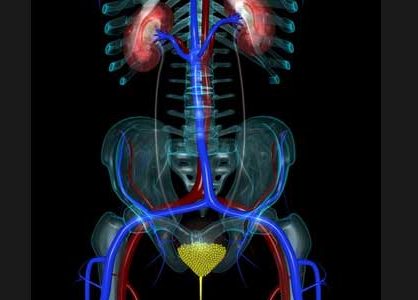
The process of producing urine, storing urine, and eliminating urine is amazingly complex.  It involves the function and co-ordination of the brain and the spinal cord, intact nerves and muscles, a functioning bladder, and the unobstructed flow of urine through the lower urinary tract.

Urinary incontinence is a devastating problem affecting some 10 million Americans.  The major approaches to the management of urinary incontinence are long-term efforts through an interdisciplinary approach.  A multitude of incontinence products play a vital role in the treatment and management of the various types of urinary incontinence.  There are many modalities of treatment which depend upon the “type” of urinary incontinence as well as the individual attributes of the patient.  Appropriate use of incontinence products are essential adjuncts to successful treatment and/or management of the incontinent person.

Many people with incontinence pull away from their family and friends.  They try to hide the problem from everyone, even their doctors.  The good news is that in most cases urinary incontinence can be treated and controlled, if not cured.  The bad news is that caregivers may not know that treatment is a choice.  They may think that nursing home care is the only answer for an older person with incontinence.

Incontinence does not happen because of aging.  It may be caused by changes in your body due to disease.  For example, incontinence may be the first and only symptom of a urinary tract infection.  Curing the infection may relieve or cure the problem.  Some drugs may cause incontinence or make it worse. If you are having trouble with incontinence, see your doctor.  Even if it can’t be completely cured, modern products and ways of managing incontinence can ease its discomfort and inconvenience.

HomeHealthDelivery.com can assist you with the inconvenience associated with incontinence. Contact one of our highly qualified consultants to discuss your current situation and to implement a care plan specifically deigned for your situation.

Adult Diapers with Tape Tabs or Pull Up Adult Diapers?

June 28th, 2009

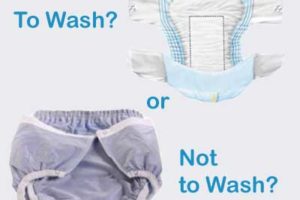
There are basically 2 types of adult diaper products for use with incontinence not including incontinent liners with mesh pants.  There are adult diapers with re-fastening tape tabs usually 2 per side and the pull up style disposable diaper undergarments.

There is no doubt that the tape tab diapers are more absorptive and are the product of choice when dealing with any type of bowel or fecal incontinence.  Pull On Adult Diaper types are usually used with more active adults with good mobility and ability to change the product themselves.

The disadvantage of Pull On Adult Diapers in this situation is that even though they have tear away sides for easy removal, you still have to remove your pants in order to put another pull up diaper on.

Tape tab diapers are difficult to put on correctly yourself or on another person for that matter.  The easiest way for you to guide the adult diaper product to ensure a good fit is to use the wetness indicator strip as a guideline.  Place the wetness indicator strip that runs the legnth of the diaper along the gluteal fold or (Butt Crack) and use this as the guide for keeping the diaper centered.  Then you can fasten the tape tabs and be confident that you will end up with the same amount of material on both sides.

My recommendation is to use a combination of products for different times of the day and changing daily activities.   The pull on diapers can be used during the day and the tape tab diapers can be used at night.  You should also try liner inserts without plastic backing as these can be used as booster pads for heavy wetters.

HomeHealthDelivery.com can provide you with a wide range of incontinence products to meet your needs.  If there is any product that we do not have please let us know and we will get it for you.

Pets Pass MRSA Superbug to Humans

June 27th, 2009

Transmission of an infectious superbug from dogs and cats to humans, and back again, is an increasing problem, a new study finds.

The superbug, a strain of bacteria known as MRSA, has evolved a resistance to antibiotics. It has long plagued hospitals but in recent years has become more common in homes. MRSA has even invaded beaches.

Only about two years ago, scientists began to seriously suspect pets were transmitting the bacteria.

In the July edition of The Lancet Infectious Diseases, Richard Oehler of the University of South Florida College of Medicine and colleagues lay out the latest thinking on MRSA (methicillin-resistant Staphylococcus aureus) and pets.

The infections can be transmitted by animal bites and most threaten young children, the researchers note.

Read more…Click Here.

What can you do to protect yourself?

Use GentleCare Non-Alcohol Foaming Instant Skin Sanitizer
Incorporating GentleCare into your daily life will provide a safe and effective means to preventing the spread of cross contamination between pet’s and human’s.

Protect yourself from M.R.S.A. – Methicillin-Resistant Staph Aureus

June 27th, 2009

What is M.R.S.A.?
M.R.S.A. is a type of infection caused by the bacteria Staphylococcus aureus. These bacteria are commonly carried on the skin or in the nose of healthy people. Some strains of staph are resistant to a class of antibiotics such as methicillin (a synthetic form of penicillin) and thus called Methicillin-Resistant Staph aureus (or M.R.S.A.).

Who gets M.R.S.A.?
S. aureus (or Staph) including M.R.S.A. can be spread among people having close contact with an infected person. M.R.S.A. is almost always spread by direct physical contact and not through the air. Transmission may also occur through indirect contact by touching objects such as towels, clothes, door knobs, workout areas, or sports equipment
contaminated with the staph.

Where will I find M.R.S.A.?
Staph bacteria can live on the skin or in the nose of healthy individuals without causing any symptoms of disease. This is known as colonization. However, injury to the skin such as a scrape or cut can allow the bacteria to enter the skin and cause an infection.

M.R.S.A. is not confined to just healthcare facilities. Cases of M.R.S.A. infection in the community setting (e.g. Day care centers, schools, prisons) are called Community-Associated M.R.S.A. and have been on the rise and show no sign of slowing. Our children are at risk and it is up to us to protect them.

Now that you know the facts, what can you do to minimize the risks?

Use GentleCare Non-Alcohol Foaming Instant Skin Sanitizer
Incorporating GentleCare into your facility will not only protect our children from M.R.S.A., it will also reduce absenteeism due to colds, flu and other illnesses.

Citrus 2 is All Natural, Hypo-allergenic, Safe Air Freshener

June 20th, 2009

The Fresh, All Natural Way to Eliminate Tough Odors

My family and I use Citrus II every day and I absolutely love it. I keep one in my car, bathroom and kitchen area. I know that I don,t have to worry about the kids inhaling harmful chemicals found in all other air fresheners. Read the contents. Butane, Petroleum and other harsh and harmful chemicals that you would not want to inhale.

citrus21Citrus II can transform a room, or an entire building, into a healthy, fresh smelling environment by eliminating foul odors on contact! With this unique air fragrance, you can create a positive, relaxing atmosphere for patients, personnel and visitors . . .naturally!

Citrus II is 100% natural and contains only the pure essential oils of tree ripened citrus fruit specially formulated to preserve their distinctive fragrance in an environmentally safe, non-aerosol container.

Citrus II is totally effective for hospitals, physicians, dentist offices, nursing homes and private households. Environmentally safe, Citrus II eliminates the harsh odors of urine, feces, decubitus ulcers, labs and exam rooms. It will also eliminate may of the odors found in the home. Smoke, pet, food and more. Citrus II is the same formula as Citrus Magic and is safe to use everywhere – it’s non-toxic, hypo-allergenic and biodegradable.

So use Citrus II and see how fresh and pleasant your healthcare or home environment can be . . . for you and your patients and your family. Strong enough for healthcare…Safe enough for the home.

Find more information by clicking here.